
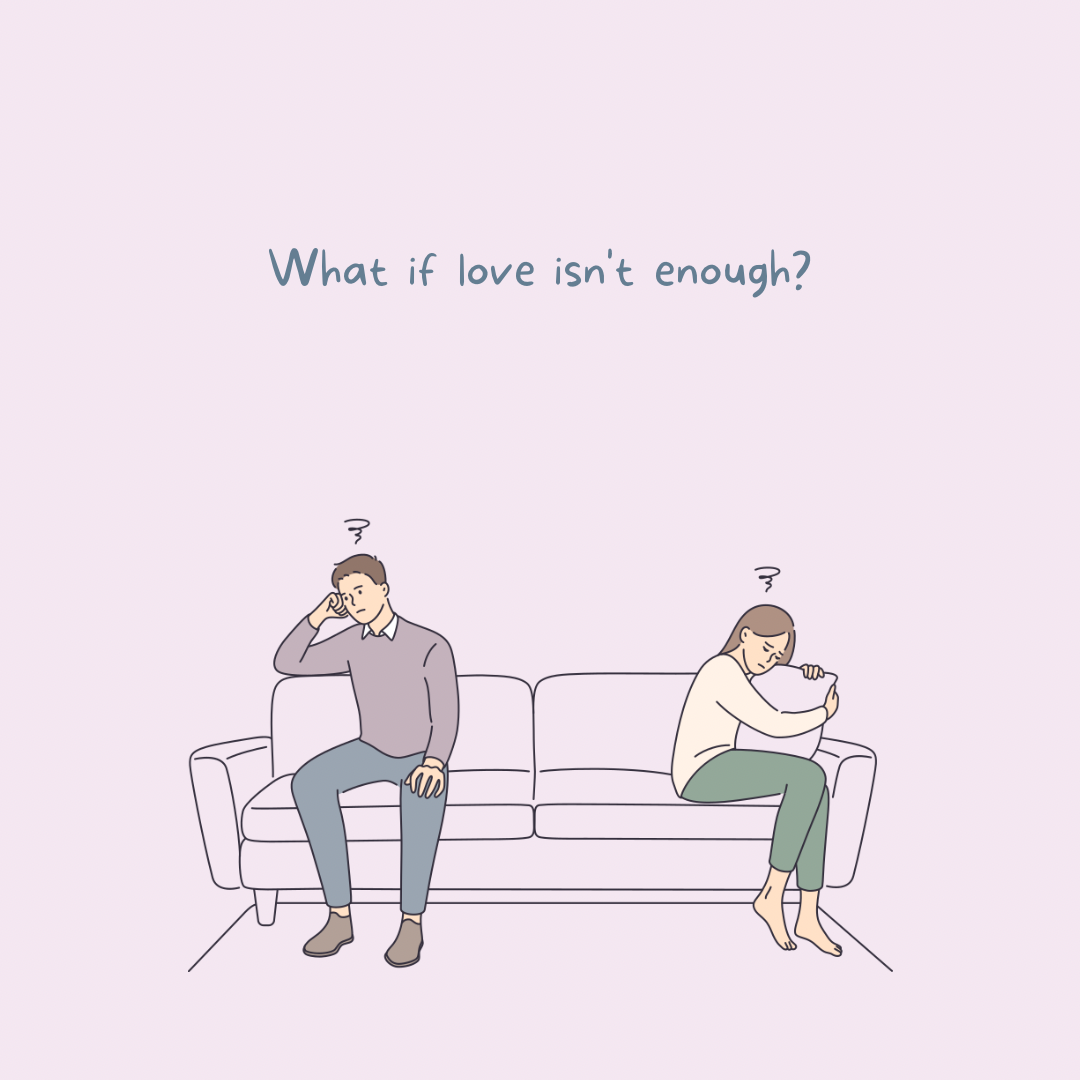
I’ve shared glimpses of my relationship in the past, often in the heat of the moment following an argument or when emotions were overwhelming. But this time, I feel it’s important to take a step back and view the entire landscape of our connection. I want to go beyond the individual disagreements or moments of frustration to explore the deeper reasons behind them. This is my attempt to be truly honest with myself, to confront our current reality rather than just focusing on the idea of what I wish we could become.
They say your 30s are when life starts to click — when you step into yourself and find clarity, stability, and maybe even joy. But for my partner, turning 30 triggered something entirely different: a fog of uncertainty and a deep sense of being lost. For me, it has brought the quiet heartbreak of watching someone I love drift away — not just from themselves but from me as well.
I want to be supportive. I have been supportive. But the truth is, I’m exhausted. I’ve tried to hold space for his confusion and to be patient with the fact that he doesn’t know what he wants right now. But what hurts the most is that, from where I’m standing, it feels like he’s not doing anything to change it.
There are no small steps, no attempts at direction. It’s just a constant cycle of waiting — and I don’t know what I’m waiting for anymore. He’s stuck, but it’s like he’s accepted being stuck. And I’m the one left carrying the weight of his inertia.
Maybe the hardest part is realizing that while he might be lost, I’m the one who’s starting to disappear.
We don’t communicate anymore — not in the way we need to. Our conversations skim the surface: groceries, work schedules, what to watch on Netflix. What we don’t talk about is the growing distance between us or how our relationship feels like it’s cracking at the foundation. I don’t know how to fix it. We need help; I’m aware of that. But we can’t afford counseling right now. How do we mend something this broken when we don’t have the tools? How do you rebuild when you don’t even know where to begin?
And layered beneath all of this is something I haven’t said out loud before: I’m starting to hate him.
It’s not who he is, deep down. It’s what he’s allowing. His sisters treat me poorly—disrespect, exclusion, subtle jabs that they know they can get away with. And two months ago, I finally asked him to say something. Just talk to them. Just let them know that he sees how they’re treating me, that it’s not okay.
He said he would.
Two months later, still nothing. Not a word. And with each passing day, his silence grows heavier. It’s not just disappointing—it feels like betrayal.
I would never say, “It’s me or them.” That’s not the kind of love I believe in. But love does mean standing beside the person you’ve chosen. It means not letting them fight alone. His silence tells me that peace in his family is more important than peace in our relationship. That hurts in a way I can’t even describe.
It’s not just that he won’t speak up. It’s that he’s watching me slowly shrink under the weight of it all, and still does nothing.
I think that’s what’s killing me the most.
And then there’s the other layer — our friends. Technically, they’re his friends. But over time, they’ve become mine too. They’re good people, and I love them. But I carry this silent fear: if things fall apart between us, will I lose them too? I don’t want to put anyone in the position of having to choose sides. I don’t want to lose my whole support system in one blow.
There’s no dramatic blow-up, no cheating scandal, and no unforgivable betrayal. Instead, it’s the slow erosion of connection, balance, and mutual effort that creates the pain. Perhaps that quietness makes it even more difficult to bear — the realization that love alone isn’t always enough.
I don’t know what the next step is, but love shouldn’t feel like a one-sided effort to keep someone else from drowning, especially when they’re not trying to swim.
For now, I’m allowing myself to feel everything — the sadness, the resentment, the ache of wanting more. Maybe, in time, I’ll find the strength to choose myself, even if it means letting go.
I don’t want to give up on us, but I also can’t keep abandoning myself to save something we’re both letting fall apart. Writing this is my way of saying I’m still here. I still care. But we both need to start trying. Love shouldn’t be about who can hold on the longest while everything around us breaks.
If we’re not going to seek counseling, we need something. We need honesty, effort, accountability, and a real conversation. This isn’t just a rough patch anymore — it’s a warning sign. Pretending everything is fine won’t fix what has been silently crumbling for months.
For now, I’m letting myself feel it all—the sadness, the resentment, the ache of still caring. Maybe, in time, I’ll find the strength to choose myself, even if it means letting go.
I’m writing this because I’m still here. I still want this to work. But I can’t do it alone. We need honesty. We need effort. We need accountability. We need a real conversation. Because this isn’t just a rough patch anymore. It’s a warning sign.
And maybe, just maybe, someone reading this has been here too.
So here’s where I’m asking for something:
- How do I support a partner who feels lost, without losing myself in the process?
- How can we rebuild communication when it feels like we’re speaking different emotional languages?
- Is it possible to heal this kind of disconnection without professional help? If so, what helped you?
I don’t have all the answers. I’m just someone trying to hold on to love without letting go of myself in the process. If you’ve walked this road before, I’d love to hear your thoughts, your lessons, your survival stories.
I’m listening.

